
Home » What is HSE?
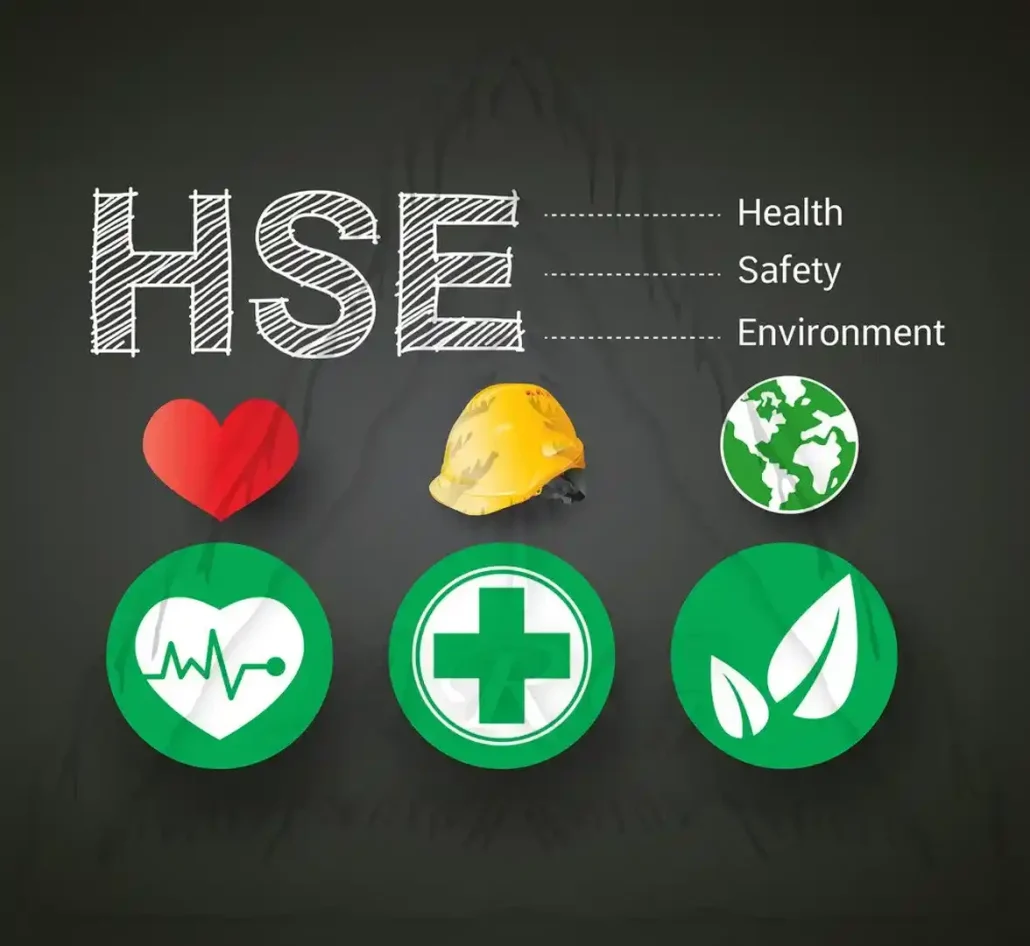
A health, safety and environment (HSE) approach is a comprehensive approach that includes methods, policies and procedures aimed at protecting the health of employees, contractors, visitors and the environment in the workplace. HSE management includes activities such as identifying and mitigating hazards, promoting a safety culture, and ensuring compliance with industry regulations and standards. The term HSE consists of three terms: health, safety and environment, and is used in the management system and certificates related to HSE. The purpose of implementing the HSE management system and obtaining the HSE certificate is to control and eliminate risks related to health, safety and the environment. In industries such as mining, oil, gas or construction, which are known as very dangerous industries, having an HSE certificate is essential. Compliance and implementation of HSE guidelines in the health, safety and environment management system is essential for any organization to ensure the health and safety of employees and the protection of the environment.
Based on the extent of their effects, the standards cover five levels: factory, company (community), national, regional and international. Factory standards are developed by a manufacturing unit for its internal use. Some companies or organizations in a particular field develop their own standards, often through the creation of societies or associations, such as the standards of the American Welding Society (AWS).
National standards are compiled by the national standards institutes of each country, according to the specific conditions of that country from economic, social, scientific and technical aspects. Regional standards are developed by member states of a specific regional agreement, such as the standards of the European Committee for Standardization (CEN).
International standards are prepared by relevant organizations with the aim of ensuring universal usability, such as standards produced by the International Organization for Standardization (ISO) or the International Electrotechnical Commission (IEC).
The knowledge of occupational health, as a relatively new specialty, however, the concepts related to it have been of interest for a long time.
Ramazzini was the first doctor to investigate the diseases caused by different occupations and suggested to the doctors that when asking the patient, they should also inquire about the details of his occupation, because there is a possibility of a close connection between the occupation and the disease.
Now, doctors use this very important question in describing the condition of patients, because after Ramazzini’s research, complications caused by work have attracted more attention of doctors.
In Iran, after the Islamic Revolution, the Ministry of Labor and Social Affairs together with the Ministry of Health, Treatment and Medical Education were responsible for monitoring the health and safety of workers and employees. In January 2013, this responsibility was placed under the supervision of the Ministry of Health, Treatment and Medical Education with the establishment of the Occupational Health Department. This department was responsible for maintaining and improving the health of the country’s workforce in various industries and jobs in the society.
It is interesting to know that due to the great importance of this issue in the world calendar, April 28, which coincides with Ardibehesht 8,
It has been recognized by the International Labor Organization as the World Occupational Health and Safety Day.
In the field of occupational health and safety, we all believe that workers have the right to operate completely safely in their workplace and to return home safe and sound.
Therefore, the main goal of standardization of the work environment is to prevent death and injuries caused by work and to provide complete safety for workers.
By ensuring employers properly manage potential risks, we can boost productivity, support the economy and build and strengthen a fairer society.
Today, HSE is recognized as a modern and effective solution that helps workers learn how to be safe and healthy in their work and life environment.
The world of work is always changing. We can use science and knowledge to understand and control these changes, and this knowledge will help us to easily face the challenges and provide the best safety conditions and the best working and business environments for employers and workers.
According to Article 85 of the Labor Law, there are requirements to preserve the country’s human resources and material resources that must be met. The Supreme Council of Technical Protection to provide technical protection and the Ministry of Health, Treatment and Medical Education are responsible for developing guidelines related to this law, the main purpose of these measures is to prevent occupational diseases and ensure the health of workers and workers and preserve the work environment.
This law has determined that all workshops, employers, workers and trainees are obliged to comply with the provisions of this principle, and there is also a note that according to this, family workshops must also comply with all the provisions of this principle and are obliged to comply with the principles of safety and health. be work
Also, due to the employment of a significant part of the workforce in the healthcare sector in providing services, according to the guidelines, healthcare centers that have at least 25 employees are required that the head or director of the healthcare center has a committee called “Technical Protection Committee” and work health” form.
In order to achieve ideal conditions and solve existing problems in working environments, the harmful factors identified by the professional health engineer must first be investigated and evaluated in the life cycle.
These factors include: physical, chemical, diseases and accidents.
The main task of a HSE engineer is to prioritize safety in the workplace and by preventing and reducing injuries and occupational complications to a minimum, he tries to reduce the pain and suffering of workers and improve their condition. In addition, other duties of an occupational health engineer include the following:
– Technical inspection of the work environment
– Measurement and evaluation of harmful physical, chemical, ergonomic and biological factors of the work environment
– Examining common work methods in workshops and providing optimal methods
– Prevention of occupational diseases and accidents in any profession
– Examining personal protective equipment and teaching how to use them
– Preparing medical records of personnel and checking their health status
These basic duties of a professional health engineer are performed in order to improve the conditions of workers and maintain their health in the workplace.

Establishing a safety, health and environment (HSE) management system and providing HSE certification brings many benefits to the organization, including:
1. Improving organizational excellence
2. Accurate knowledge of safety rules and regulations
3. Reduction of direct and indirect losses caused by accidents
4. reduction in costs
5. Reducing risks
6. Reduce accidents
7. Improving the position among suppliers and partners
8. Better reputation among investors, customers and communities
9. Increasing productivity and profitability
10. Reducing insurance premiums and legal fees
11. Reducing absenteeism and sick leave of employees
12. Better protection of employees against occupational diseases and accidents
These benefits show that the implementation of HSE as a comprehensive management system not only helps to improve the performance and safety of the organization, but also contributes to its success and sustainability in different markets.
Understanding the importance of and prioritizing HSE in the workplace leads to several benefits, including:
1. Improving employee health:
Focusing on a healthy and safe work environment improves employee health, morale, and job satisfaction.
2. Reducing incidents and accidents:
By prioritizing health, safety and environment, organizations can minimize incidents, injuries and accidents in the workplace and improve safety and productivity.
3. Regulatory compliance:
Adherence to standards and regulations prevents abuse, legal problems and preserves the organization’s reputation.
4. Improving efficiency and productivity:
A safe and healthy work environment reduces absenteeism due to injuries or illness and increases productivity and efficiency.
5. Increase credit:
Giving importance to HSE demonstrates a commitment to responsible and sustainable work practices, which strengthens the credibility and reputation of the organization among stakeholders, customers and society.
6. Cost savings:
Effective HSE management can reduce costs associated with accidents, insurance and labor claims.
These benefits show that implementing and complying with HSE principles not only helps organizations to perform better legally and economically, but also helps to improve working conditions and create a healthy and sustainable environment.
The implementation of HSE management system procedures requires the presence of key elements to ensure successful implementation and compliance with regulations. In the following, 12 basic elements in the HSE management system are mentioned:

Organizations must have a reliable and efficient system for distributing the latest codes of practice, safety standards, and other key documents to their stakeholders. Easy access to this information can help reduce communication gaps and improve compliance.
For example, the guidelines of occupational health and safety departments at the country level and showing them to employees will familiarize them with their rights and duties in the field of occupational health and safety laws. Placing posters and other safety communication materials in accessible locations provides an incentive for employees to be more aware of these issues and to follow instructions. Also, using a digital platform to store and access documents and guides related to the HSE management system in the organization is one of the vital aspects of efficient HSE management.
As a supplement to ISO 14001, ISO 14004 provides guidance for implementing an environmental management system (EMS). This standard is a valuable resource for organizations that are interested
A successful HSE management system focuses on risk analysis and management, aiming to promote a safety culture in a proactive and forward-looking manner, seeking to address problems and incidents not only within the unit, but also as a broad umbrella.
This system can cover risks identification, evaluation and control. To effectively identify potential safety, health and environment or HSE hazards in the workplace, it is essential that HSE leaders and managers know exactly what types of hazards employees are exposed to. This recognition allows the next steps such as change management and continuous improvement to be correctly determined and implemented.
Systematically improve their performance in the environmental field.
Understanding ISO standards and the environmental impact of a product or service during its life cycle is very essential. Use standard operating procedures (SOP) in emergency reports, rescue operations, and medical and therapeutic tasks, to avoid creating excessive panic when unprecedented incidents occur. it helps. The purpose of the above guidelines and guidelines on emergency preparedness and response is to provide training to employers to prepare their employees and ensure they are prepared with the knowledge and equipment necessary to effectively deal with emergency situations. Is. The ISO 14005 standard guides organizations in conducting life cycle assessments so that they can make sustainable decisions for the development of environmental management.
When the sustainability of an HSE management system is properly ensured by proper record keeping, nothing can help better than a sound management process. The effectiveness of the internal documentation system in an HSE system is related to the way of documentation, organization of programs, policies and set of standards. When the organization needs to conduct internal inspections and regular monitoring, the importance of having sufficient details in the records, holding regular training sessions and absence of gaps in key regulations are among the things that HSE managers should pay enough attention to.
Determining key performance indicators helps organizations evaluate the effectiveness of safety controls and how employees are taking actions to keep themselves and others safe. These indicators, including Lost Time to Injury Ratio (LTIR), Total Incident Rate (TCIR) and Experience Modification Rate (EMR), allow organizations to measure and analyze their safety management performance.
Also, creating standard checklists for safety inspections helps to optimize processes and increase the quality of HSE inspections. These checklists contain in-depth awareness and relevant data for organizations about the performance of their HSE management system. Typically, this is the local point where incident management can also be achieved.
ISO certification leads to an improvement in the image of an organization. Trust in this special team structure, which includes leaders, managers and HSE members, is essential for the targeted and more effective implementation of the HSE management system in the organization. This group and its members should focus on the prevention of accidents and injuries in the workplace and correctly apply key performance indicators (KPI) to achieve a safer workplace and implementation strategies to achieve this goal. Ensures that organizations with local regulations
Determining key performance indicators helps organizations evaluate the effectiveness of safety controls and how employees are taking actions to keep themselves and others safe. These indicators, including Lost Time to Injury Ratio (LTIR), Total Incident Rate (TCIR) and Experience Modification Rate (EMR), allow organizations to measure and analyze their safety management performance.
Also, creating standard checklists for safety inspections helps to optimize processes and increase the quality of HSE inspections. These checklists contain in-depth awareness and relevant data for organizations about the performance of their HSE management system. Typically, this is the local point where incident management can also be achieved.
and international match well. This not only helps manage legal risks, but also demonstrates a commitment to ethical and responsible business practices. Consumers, investors, and other stakeholders are likely to engage more with companies that have a commitment to environmental responsibility. These standards encourage organizations to achieve higher resource efficiency, process integration, and waste reduction. This action not only helps to preserve the environment but also saves costs and improves operational efficiency.
Since non-compliance with laws and regulations may lead to serious financial consequences, damage to organizational reputation and operational disruptions, the role of HSE in the workplace also includes the organization’s financial and legal issues. Internal assessments can be a step in the right direction to ensure the organization’s compliance with regulations, but for many organizations, using a third-party service to assess and determine the level of compliance will be a better decision.
Roles and responsibilities along with goals and objectives at the level of management and employees should be clearly defined so that everyone is properly aware of their individual roles and responsibilities. This can be clearly implemented by developing standard operating policies (SOPs) and written agreements that specify how tasks are to be performed.
Also, employers have a responsibility to consider the duties of HSE employees in their job descriptions and to implement disciplinary measures if necessary.
In order to improve the overall HSE management system, it is recommended to hold regular meetings to review and evaluate the current HSE policies. These meetings give managers and employees the opportunity to collaborate in improving the sustainability of the HSE system and improve safety communication issues. It is also important to review the effectiveness of the safety communication program, to ensure that all required aspects are properly covered. In these reviews, the need to pay more attention to some aspects may also be determined, which can include root cause analysis (RCA), job hazard analysis (JHA) and other related items. For the effective implementation of these processes, it is recommended to be in regular contact with the stakeholders and provide the necessary coordination.
Also, employers have a responsibility to consider the duties of HSE employees in their job descriptions and to implement disciplinary measures if necessary.
Training programs in the HSE management system are designed and implemented to maintain the awareness of teams and employees in the field of safety, their readiness to face emergencies, accidents and other HSE risks, as well as their mastery of these skills. These programs include various trainings such as fire safety training, first aid training, and emergency evacuation training programs.
Even if the HSE program is implemented properly, some incidents and issues may still exist, so it is vital to continue to review and plan policies and programs within the organization. In conducting audits and inspections of the HSE management system, an opportunity is provided to evaluate areas of improvement and necessary actions to improve existing policies and processes, in order to reduce potential risks and improve performance.
Organizations are obliged to minimize their possible negative effects on the environment and, with initiatives, increase their positive contribution to the preservation of the climate and the environment by using renewable energy, reducing carbon emissions, and preventing pollution from business operations. . A successful HSE management system must include clear policies to guide employees, safety personnel and other stakeholders.
Organizations are obliged to minimize their possible negative effects on the environment and, with initiatives, increase their positive contribution to the preservation of the climate and the environment by using renewable energy, reducing carbon emissions, and preventing pollution from business operations. . A successful HSE management system must include clear policies to guide employees, safety personnel and other stakeholders.
ISO 45001 (2018 edition), which has been introduced as the global standard for occupational health and safety management systems (OHS), has replaced the British standard OHSAS 18001. The main goal of this standard is to protect employees and clients from accidents, diseases and injuries caused by work.
ISO 14000 (2015 edition) is an international standard that defines the responsibility of an organization’s environmental management system (EMS). It is a global standard for environmental management (EMS) whose requirements for organizations covered by it include environmental policy, assessment of environmental damage and accident sites that may be damaged, design and implementation of environmental projects to improve and preserve life on the planet, determine resources and facilities to achieve these goals, and continuous pursuit to improve the environment.
This standard outlines specific guidelines that help organizations reduce negative environmental impacts, respond responsibly to changing environmental conditions, and at the same time maintain a quality operational balance.
The history of environmental protection goes back to the year 1353 in Iran, when according to Article 26 of the Law, the National Iranian Oil Company was required to use full care and precision in every contract it concludes in order to preserve natural resources and Prevent environmental pollution (air, water, and land).
1. Formulating and implementing health, safety and environment policies, procedures and programs and monitoring them.
2. Investigating incidents, accidents and complaints and proposing corrective measures to prevent similar incidents from occurring.
3. Conduct risk assessment, data analysis and make recommendations for corrective action plans.
4. Monitoring, inspection and assessment of hazardous materials, hazardous waste and pollution control equipment.
5. Monitoring emergency response plans and coordinating fire prevention activities.
6. Monitoring compliance with local and national regulations related to health, safety and environmental policies.
7. Preparation and implementation of safety training programs for the employees of the organization.
8. Preparing and presenting reports to management and regulatory organizations.
9. Management of safety, health and environment budget.
10. Maintain records and documents related to HSE programs.
• Creating a proper infrastructure to improve productivity and improve the performance level of the organization
• Reduction of direct and indirect losses caused by accidents and incidents
• Targeting and optimizing activities related to safety, health and environment system management
• Efficient assessment of safety, health and environmental risks
• Reducing costs related to safety, health and environmental damage, including work stoppages, treatment costs, and damage to equipment and devices.
• Comprehensive understanding of potentially harmful factors in the work environment
• Determining the formal structure for the management of the HSE system and determining the related responsibilities
• Targeting and unification of the health, safety and environment management system
• Creating a suitable platform for the continuous improvement of the HSE management system in the organization
• Complete familiarity with safety and work environment laws and regulations
• Compliance with the principles of protection and safety in the workplace
• Effective risk assessment and incident control
• Motivating employees to promote a safe work environment
• Creating suitable facilities for the productivity of employees’ intellectual capabilities in order to strengthen the HSE management system
• Providing a suitable educational environment and culture in the fields of health, safety and environment for all employees
• Support the successful implementation of existing requirements and plans in the fields of health, safety and environment
لطفا فرم زیر را به دقت پر کنید تا مشاورین ما در اسرع وقت با شما تماس حاصل فرمایند.
Please fill out the form below carefully so that our consultants will contact you as soon as possible.